
The Beginner’s Guide to Fasting
Start with clarity.
Build your rhythm.
Create lasting change.
Fasting doesn’t need to be extreme. At its core, fasting simply means setting aside planned time without calories, followed by a normal eating window.
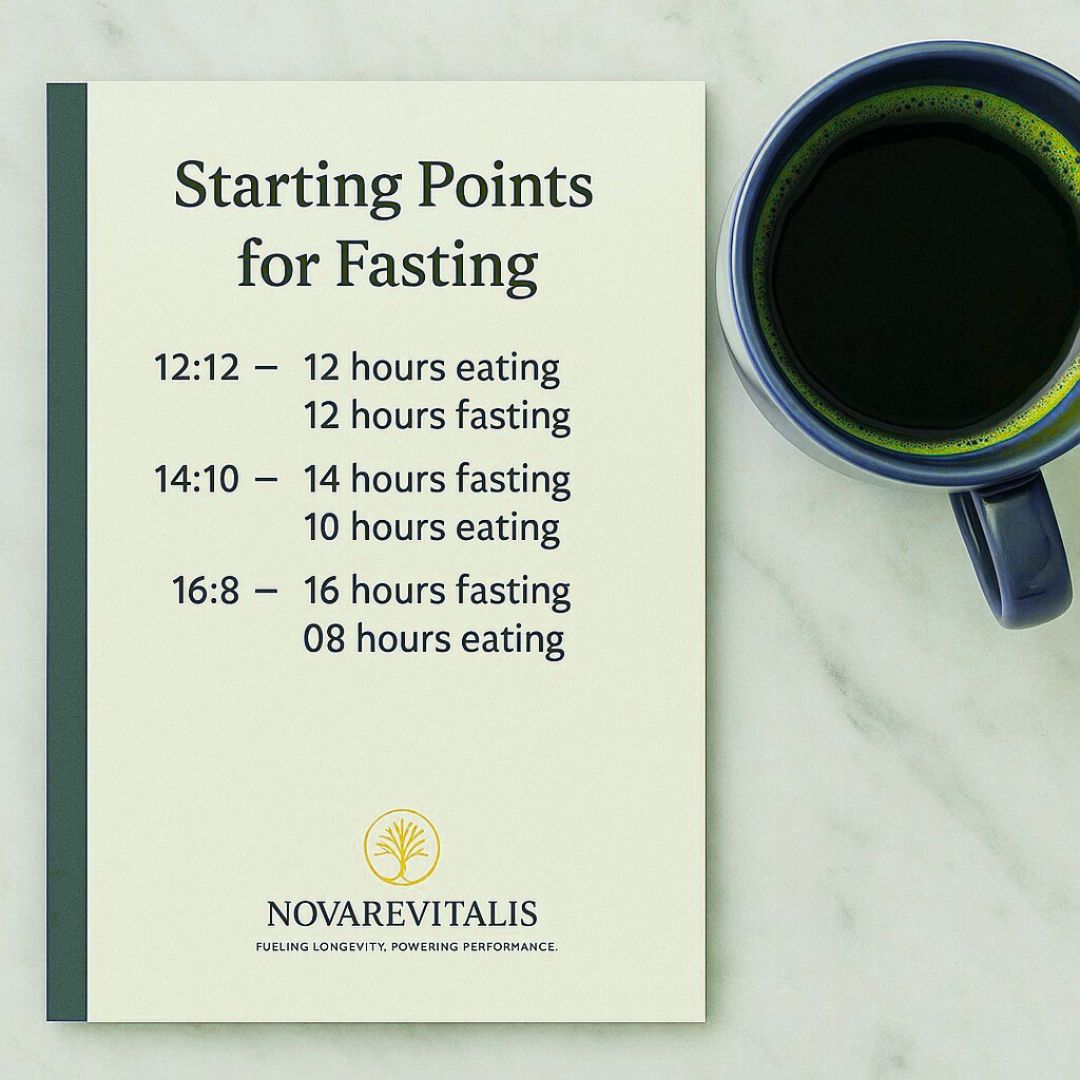
The most common starting points are:
12:12 — 12 hours eating, 12 hours fasting
14:10 — 14 hours fasting, 10 hours eating
16:8 — 16 hours fasting, 08 hours eating
During fasts, water, black coffee, and plain tea are acceptable. You don’t need complex supplements or complicated hacks—just a clear structure.
Guidance from Experts
“Food is information.” —
Dr Mark Hyman
“Start with ~14 hours fasting and build gradually.” — Dr Eric Berg
These reminders highlight that fasting is less about restriction and more about teaching your body how to use energy efficiently.
Why Fasting Works
Fasting isn’t a trick or a shortcut, it’s how your body naturally responds when given rest from constant food intake.

Encourages a metabolic switch
After fasting long enough, your body begins using fat and ketones for fuel instead of relying solely on glucose (Mattson).
Provides built-in structure
By limiting eating windows, fasting often reduces overall intake without calorie counting.

Circadian Rhythm Eating
Earlier eating windows help sync with circadian rhythms, improving appetite regulation and metabolic health (Panda).
The 14-Day On-Ramp
Starting too aggressively can leave you tired and discouraged. Instead, follow this simple two-week progression:
Days 1–3
- Use the 12:12 rhythm
- Fix a consistent stop-eating time each evening
Days 4–7
- Move to 14:10 on most days
- Prioritize meals with protein and fiber for satiety
Days 8–14
- Try 16:8 on three to five days
- Keep 12–14 hours fasting on other days to maintain flexibility
Comfort Practices
- Stay hydrated, using electrolytes if needed
- Finish dinner earlier to support better sleep
- Aim for 7–9 hours of rest each night
Tip
If you notice sharp hunger spikes or energy crashes, the issue often lies in how you break your fast. Start your eating window with protein and plant-based foods, then add carbohydrates as needed. This steadies blood sugar and reduces cravings.
Follow This
Your Next Step
This guide provides your foundation, but structure makes success easier. To help you begin with confidence, we’ve created a detailed 14-Day Beginner Plan.
Inside, you’ll find:
A daily fasting and eating schedule
Meal and hydration guidance
Sleep and recovery strategies
A printable tracker to keep you consistent
COMPANY
Keep in Touch
Copyrights 2025 | Terms & Conditions
Disclaimer: The information available is for informational purpose only and not intended to diagnose, treat, cure, or prevent any disease.