
Fasting Training
Pair Fasting with Productivity, Workouts, and Clear Thinking
Fasting isn’t just about when you eat, it’s about how your energy, focus, and training adapt when you give your body a consistent rhythm. With the right adjustments, fasting can support both mental clarity and physical performance.
Inspired By:
Mattson, Panda, Longo, Ohsumi, Huberman, Hyman, Berg, Winter, Seyfried
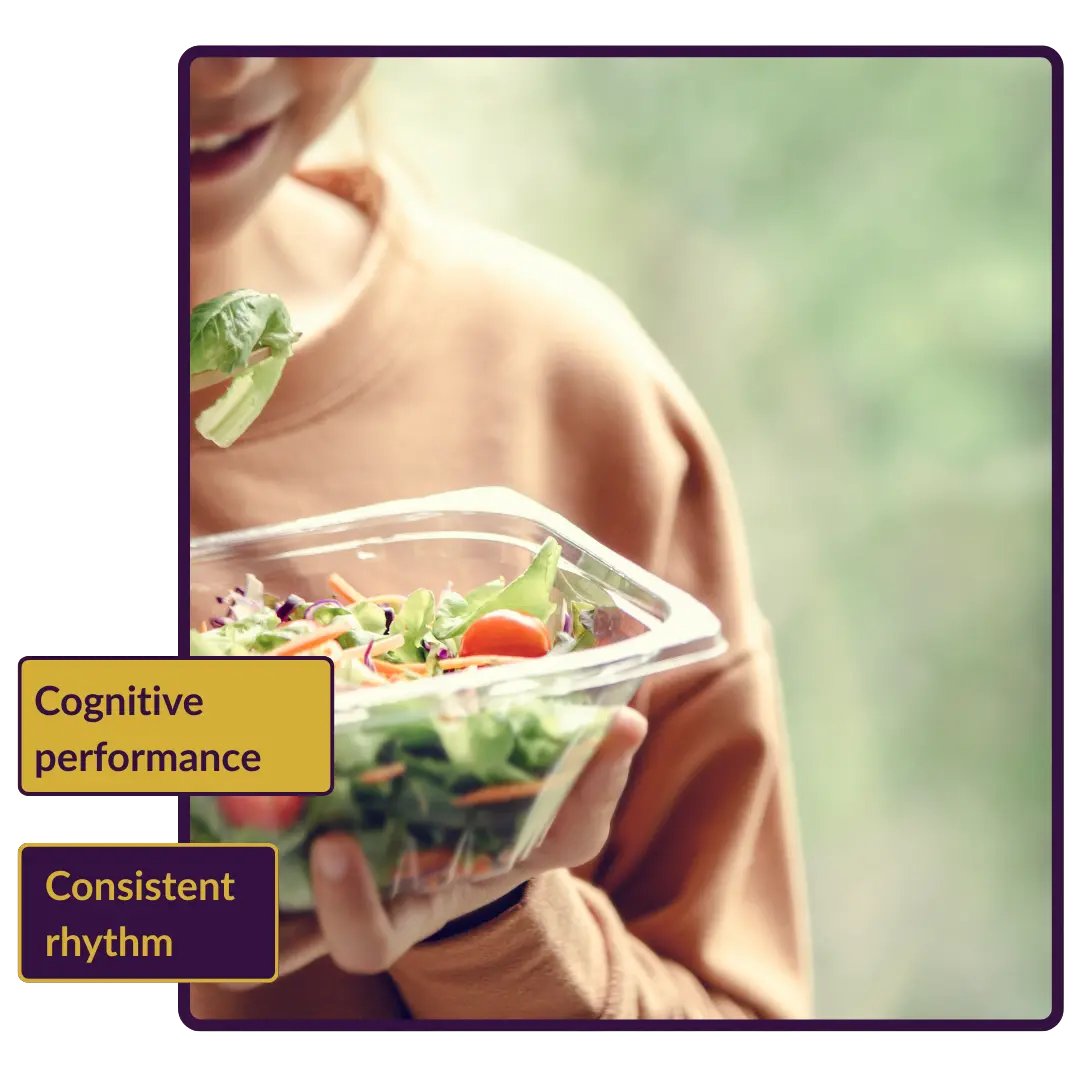
Work & Cognition
Many people notice steadier focus during fasting hours, free from the dips and spikes that often come with constant snacking.
Others may take a few weeks to adjust.
The best way to understand your response is to track your focus and energy for 2–3 weeks. Pay attention to your most productive hours and align your eating window accordingly.
Research Insight:
Neuroscientist Andrew Huberman highlights that aligning your feeding with circadian rhythms, eating earlier and keeping windows consistent can support cognitive performance and mood.
Training Placement
Your workouts don’t need to suffer while fasting. In fact, with a few adjustments, they can improve:
Strength & High-Intensity Training (HIIT)
Best scheduled near the start of your eating window, so you can refuel with protein and nutrients soon after.
Low-to-Moderate Cardio
Activities like walking, cycling, or light jogging can be done fasted—just stay hydrated and listen to your body.
Recovery
Sleep is still the foundation of progress. Aim for 7–9 hours each night to support muscle repair, mental clarity, and hormonal balance.
The NovareVitalis™ Weekly Matrix
A simple framework you can adapt to your own life:
Weekly Framework
- Monday / Wednesday / Friday → Strength or HIIT sessions inside your eating window
- Tuesday / Thursday → Easy fasted walk or light cardio
- Weekend → Flexible—choose what works best for your schedule and recovery
This rhythm balances training stress with fasting benefits while keeping your week realistic and adaptable.
The Fasting Treasure No where to found

Fasting & Cancer: What the Science Really Says (So Far)
Fasting and cancer sits at a sensitive intersection. The short version: promising mechanisms and early human signals, but not a replacement for oncology care. Here’s an honest, research-grounded tour.
Why scientists are interested
Cancer cells often rely on constant growth signals (insulin/IGF-1, mTOR) and have rigid metabolic needs (e.g., high glucose uptake). Fasting lowers insulin/IGF-1, suppresses mTOR, activates AMPK/sirtuins, and ramps autophagy—a milieu that can stress cancer cells while leaving normal cells more resilient. Ketones may not be efficiently used by some tumors, creating a metabolic mismatch.
Differential stress resistance (DSR)
In multiple preclinical models, short fasts protected normal cells from chemotherapy toxicity while sensitizing tumors—the “DSR” concept. Mechanism: healthy cells, sensing a low-nutrient state, enter maintenance mode; cancer cells keep dividing and become more vulnerable.
Fasting-mimicking diet (FMD) and small human studies
Cyclical FMD (very-low-calorie, low-protein, plant-based for 4–5 days/month) reduced IGF-1, insulin, and inflammation and improved risk factor clusters in humans (Brandhorst et al., 2015). Small pilot studies around chemotherapy suggest reduced fatigue, GI side effects, and better tolerance when patients used brief fasting/FMD under medical supervision. Early phase trials are exploring whether fasting/FMD enhances response to chemo, endocrine therapy, or immunotherapy; results are preliminary.
What we cannot claim
Fasting does not “cure” cancer.
We lack large RCTs showing fasting improves survival.
Tumors are heterogeneous; some may adapt to fasting or low-glucose environments.
Practical guidance for patients (with their oncology team)
Do not self-impose long fasts during active treatment without your oncologist’s approval—malnutrition and sarcopenia worsen outcomes.
If your team approves, brief fasts (e.g., 24–48 h pre-chemo, 24 h post) or FMD cycles are the usual research-backed patterns.
Protein sufficiency between cycles is critical; resistance exercise helps preserve lean mass.
Watch for weight loss, weakness, or poor wound healing—reasons to stop fasting immediately.
Prevention & survivorship
Outside active treatment, IF may lower insulin/IGF-1, reduce visceral fat/inflammation, and improve metabolic health—factors tied to lower risk of several cancers (e.g., colorectal, breast post-menopause). A Mediterranean-style diet, regular exercise, limited alcohol, and healthy weight remain the strongest lifestyle levers; IF can help you keep them.
Bottom line
Fasting and FMD show mechanistic plausibility and early clinical promise for improving tolerance to therapy and possibly enhancing efficacy—but standard care comes first. Any fasting in oncology should be clinician-directed, with vigilant nutrition and strength maintenance.
Selected references
Brandhorst S et al. FMD improves risk factors. Sci Transl Med. 2015;7:285ra62.
Longo VD, Mattson MP. Fasting and disease, mechanisms. Cell Metab. 2014;19:181–192.
de Cabo R, Mattson MP. N Engl J Med. 2019;381:2541–2551.
Safdie FM et al. Fasting and chemotherapy tolerance (pilot). Sci Transl Med. 2009;1:13ra2.
Dorff TB et al. Safety of fasting before chemotherapy. BMC Cancer. 2016;16:360.

Ready to Begin?
Start today with our free 14-Day Beginner Plan and take your first step into fasting with clarity and confidence.
COMPANY
Keep in Touch
Copyrights 2025 | Terms & Conditions
Disclaimer: The information available is for informational purpose only and not intended to diagnose, treat, cure, or prevent any disease.