
Fasting Training
Pair Fasting with Productivity, Workouts, and Clear Thinking
Fasting isn’t just about when you eat, it’s about how your energy, focus, and training adapt when you give your body a consistent rhythm. With the right adjustments, fasting can support both mental clarity and physical performance.
Inspired By:
Mattson, Panda, Longo, Ohsumi, Huberman, Hyman, Berg, Winter, Seyfried
Work & Cognition
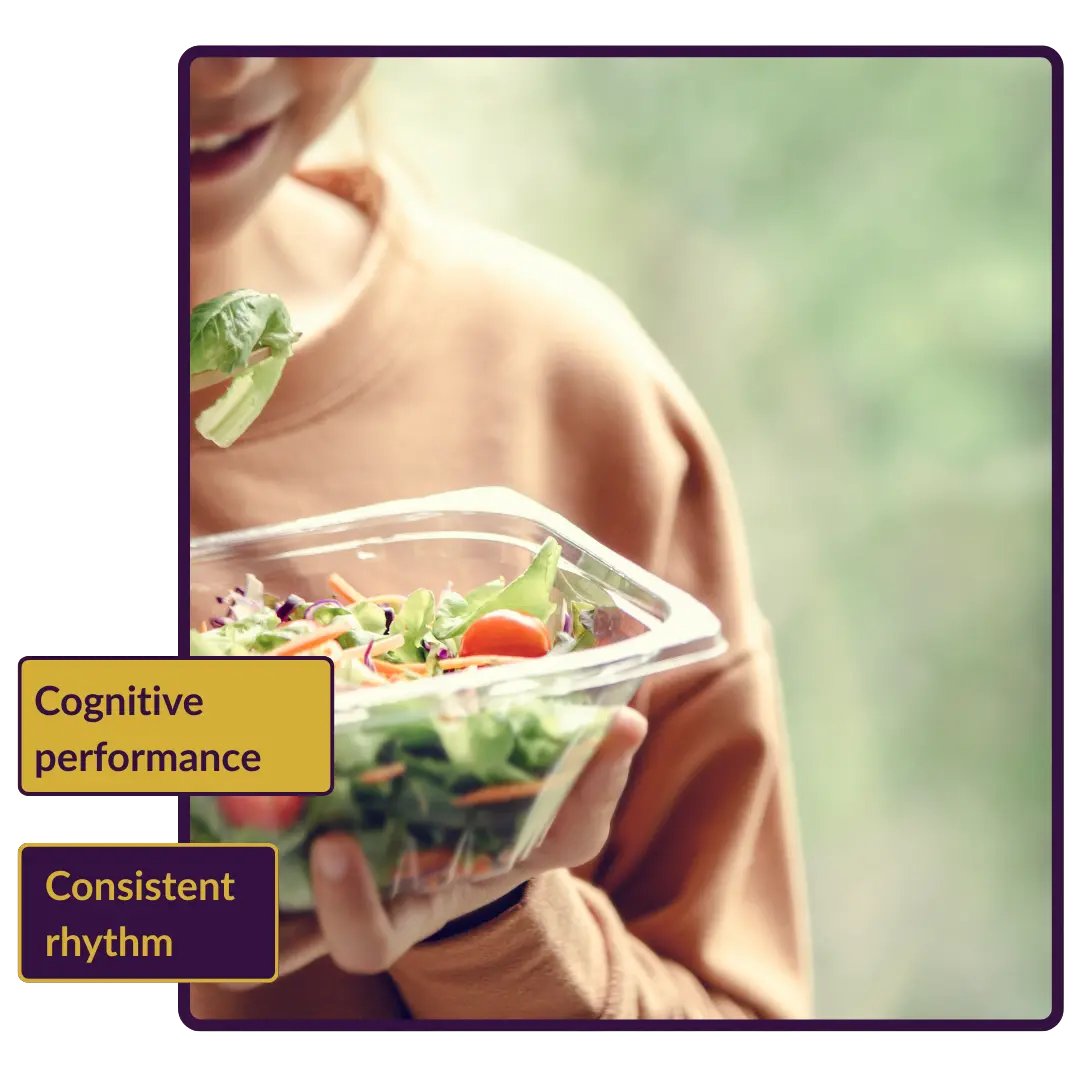
Many people notice steadier focus during fasting hours, free from the dips and spikes that often come with constant snacking.
Others may take a few weeks to adjust.
The best way to understand your response is to track your focus and energy for 2–3 weeks. Pay attention to your most productive hours and align your eating window accordingly.
Research Insight:
Neuroscientist Andrew Huberman highlights that aligning your feeding with circadian rhythms, eating earlier and keeping windows consistent can support cognitive performance and mood.
Training Placement
Your workouts don’t need to suffer while fasting. In fact, with a few adjustments, they can improve:
Strength & High-Intensity Training (HIIT)
Best scheduled near the start of your eating window, so you can refuel with protein and nutrients soon after.

Low-to-Moderate Cardio
Activities like walking, cycling, or light jogging can be done fasted—just stay hydrated and listen to your body.

Recovery
Sleep is still the foundation of progress. Aim for 7–9 hours each night to support muscle repair, mental clarity, and hormonal balance.
The NovareVitalis™ Weekly Matrix
A simple framework you can adapt to your own life:
Weekly Framework
- Monday / Wednesday / Friday → Strength or HIIT sessions inside your eating window
- Tuesday / Thursday → Easy fasted walk or light cardio
- Weekend → Flexible—choose what works best for your schedule and recovery
This rhythm balances training stress with fasting benefits while keeping your week realistic and adaptable.
The Fasting Treasure No where to found

Intermittent Fasting for Type 2 Diabetes: Remission, Meds, and Real-World Practice
Type 2 diabetes (T2D) is fundamentally a carbohydrate-intolerance disease driven by insulin resistance and excess liver/visceral fat. Intermittent fasting (IF) can attack each mechanism by lowering basal insulin, improving insulin sensitivity, and shrinking ectopic fat—sometimes allowing medication reductions under medical supervision.
What the evidence shows
Intermittent energy restriction vs. continuous restriction. In adults with T2D, intermittent energy restriction (e.g., 5:2) achieved non-inferior HbA1c reductions and weight loss compared with continuous daily restriction over 12 months (Carter et al., 2018).
Time-restricted eating (TRE). Early TRE improves glycemic variability and insulin sensitivity even without weight loss in prediabetes (Sutton et al., 2018). TRE studies in people with metabolic syndrome show lower 24-hour glucose, smaller post-meal excursions, and improved blood pressure (Wilkinson et al., 2020).
Medication de-intensification (clinical experience + small trials). Many patients can reduce insulin or sulfonylureas when fasting windows begin—only with clinician oversight to avoid hypoglycemia. GLP-1 receptor agonists and metformin pair well with IF but still warrant monitoring.
Why IF works in T2D
Lower insulin exposure (fasts) restores receptor sensitivity.
Hepatic fat reduction improves hepatic insulin signaling and fasting glucose.
Improved metabolic flexibility reduces post-prandial spikes; ketone signaling may calm inflammation that drives insulin resistance.
Earlier windows leverage circadian biology—your pancreas and muscles handle calories better earlier in the day.
Practical T2D IF framework (with clinician)
Pick a gentle start: 12:12 for 1–2 weeks (no food 8 pm–8 am). Track fasting glucose and symptoms.
Progress to 14:10 or 16:8, ideally ending meals earlier (e.g., 8 am–6 pm or 10 am–6 pm).
Meals in the window: protein-forward, high-fiber, minimally processed carbs, healthy fats.
Movement after meals: 10–15 minutes walking lowers post-prandial glucose.
Strength training 2–3×/week: increases GLUT-4 and insulin sensitivity.
Medication plan: pre-agree with your clinician how to titrate insulin/sulfonylureas on fasting days to prevent hypos.
What about remission?
Large remission trials using low-energy diets (e.g., DiRECT) show substantial diabetes remission with weight loss driven by calorie restriction and liver/visceral fat loss. IF is a different structure to create similar energy deficits and fasted signaling. Remission depends on magnitude of fat loss and duration; IF can be the sustainable method that gets you there.
Safety and red flags
Do not begin aggressive fasting while on insulin or sulfonylureas without a medication plan.
Be cautious with SGLT2 inhibitors (risk of euglycemic ketoacidosis in rare cases) if combining with prolonged fasts.
If you experience hypoglycemia, dizziness, or confusion, break the fast and follow your clinician’s plan.
Pregnant/breastfeeding: IF for weight loss is not appropriate.
Bottom line
IF can be a powerful adjunct for T2D: lower insulin exposure, better glycemic profiles, weight and visceral fat loss, and potential medication de-intensification—when done safely with clinician guidance and anchored by protein-rich, fiber-dense meals and regular movement.
Selected references
Carter S et al. Intermittent vs continuous energy restriction in T2D. JAMA Netw Open. 2018;1:e180756.
Sutton EF et al. Early TRE in prediabetes. Cell Metab. 2018;27:1212–1221.e3.
Wilkinson MJ et al. TRE improves cardiometabolic health in metabolic syndrome. Cell Metab. 2020;31:92–104.
de Cabo R, Mattson MP. N Engl J Med. 2019;381:2541–2551.

Ready to Begin?
Start today with our free 14-Day Beginner Plan and take your first step into fasting with clarity and confidence.
COMPANY
Keep in Touch
Copyrights 2025 | Terms & Conditions
Disclaimer: The information available is for informational purpose only and not intended to diagnose, treat, cure, or prevent any disease.