
How Fasting Works
Simple science, practical takeaways.
Fasting changes more than your eating schedule it changes how your body fuels, repairs, and regulates itself. Here are the key processes explained simply:
Metabolic Switching & Signalling
Circadian Timing (Biological Clock)
Autophagy (Cellular Housekeeping)
Longevity Angles
Weight & Metabolic Health
Details are Given Below
One
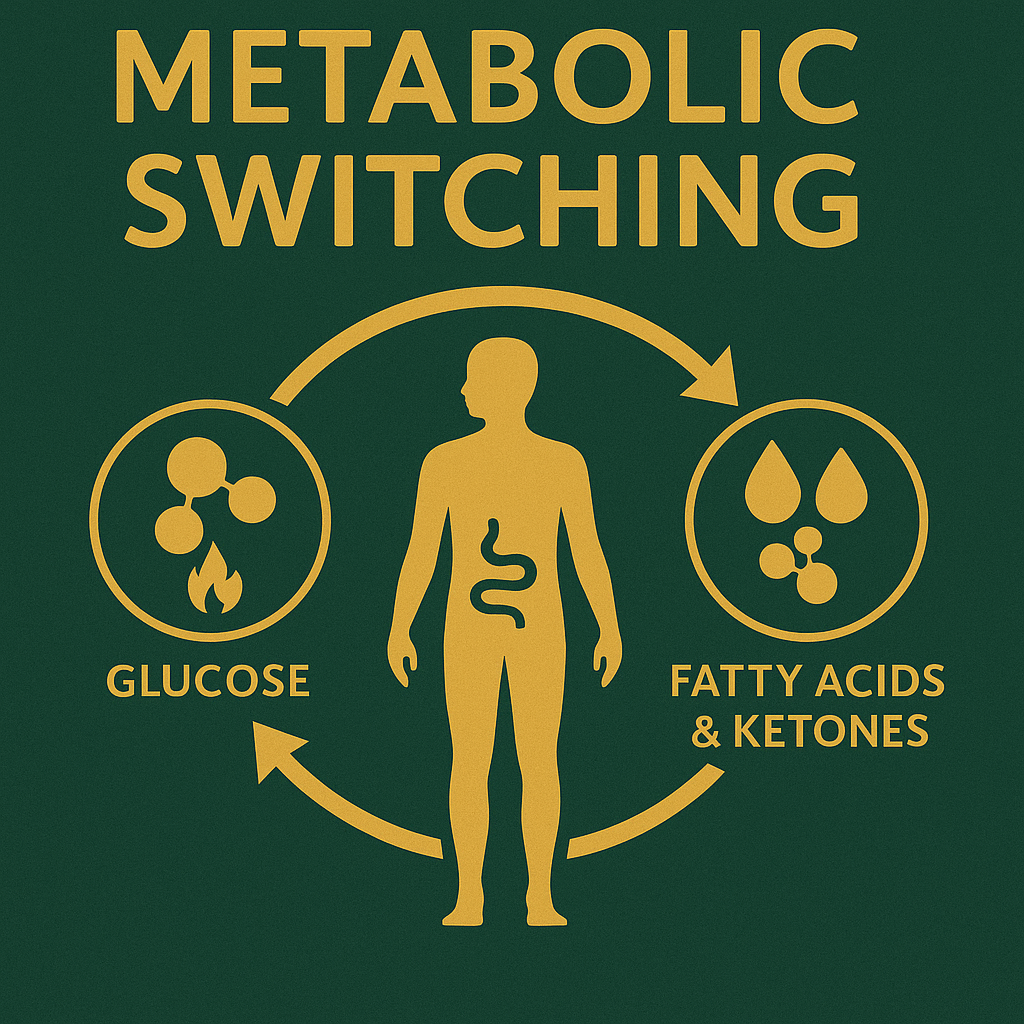
Metabolic Switching & Signalling
When you fast long enough, your body gradually shifts away from burning glucose as its main fuel. Instead, it starts using fatty acids and ketones. This process, often called metabolic switching, activates signalling pathways like AMPK and mTOR, which play roles in energy regulation and repair (Mattson).
What it means for you:
Fasting encourages your body to become more flexible in how it uses energy, which may improve resilience and reduce energy crashes.
Two
Circadian Timing (Biological Clock)
Your body has a natural clock that governs sleep, hormones, and metabolism. Eating in sync with this clock matters. Research by Satchin Panda shows that earlier eating windows—finishing meals earlier in the day—can improve blood sugar control and appetite regulation, even without weight loss.
What it means for you:
Eating earlier in your fasting rhythm may help you feel more balanced and support metabolic health.
Two
Circadian Timing (Biological Clock)
Your body has a natural clock that governs sleep, hormones, and metabolism. Eating in sync with this clock matters. Research by Satchin Panda shows that earlier eating windows—finishing meals earlier in the day—can improve blood sugar control and appetite regulation, even without weight loss.
What it means for you:
Eating earlier in your fasting rhythm may help you feel more balanced and support metabolic health.
Three
Autophagy (Cellular Housekeeping)
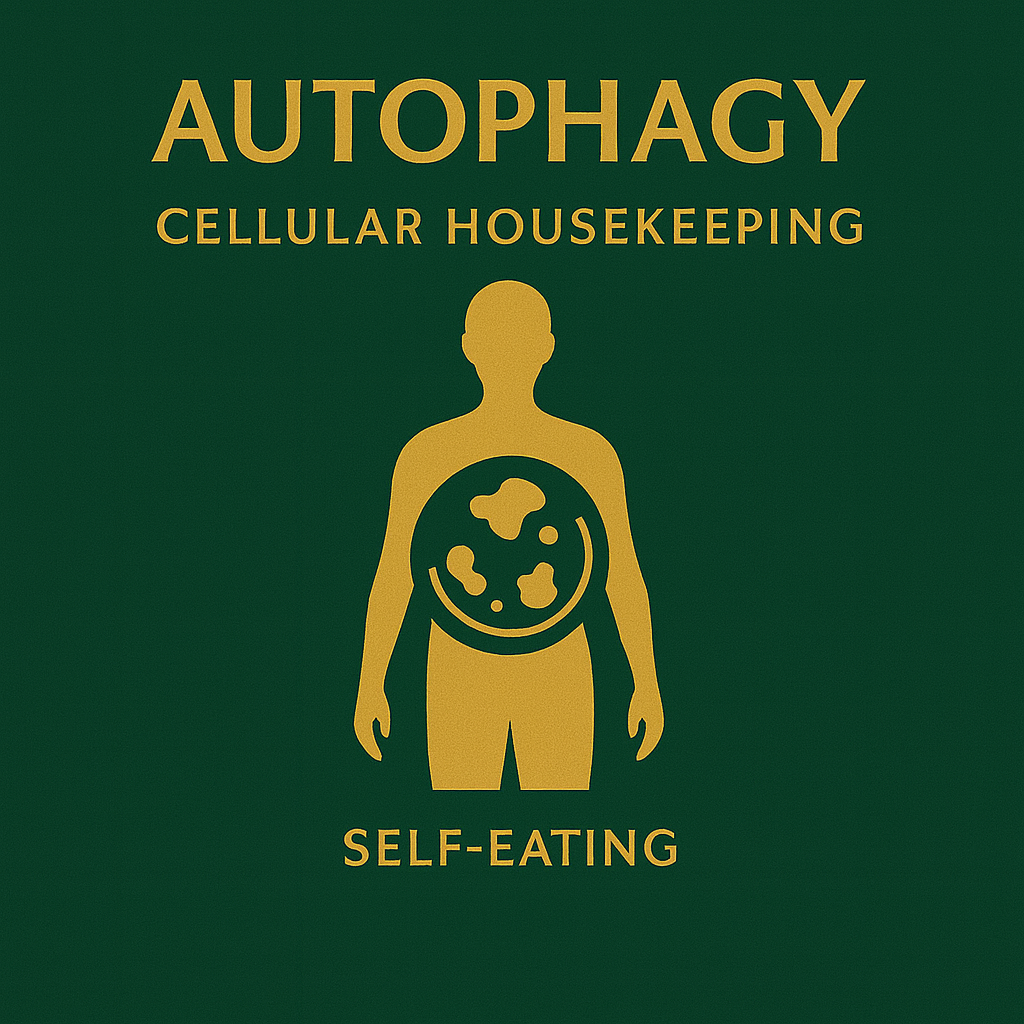
In longer fasts, your cells enter a process called autophagy, which literally means “self-eating.” Damaged proteins and cell components are broken down and recycled. Yoshinori Ohsumi’s Nobel Prize–winning work put autophagy in the spotlight. This process supports cellular repair, resilience, and healthy aging.
What it means for you:
While autophagy is promising for longevity, it’s not a license for extreme fasting. Balance and safety still matter most.
Weight & Metabolic Health
Four
Large studies comparing intermittent fasting with continuous calorie restriction often show similar weight-loss results. The biggest factor isn’t the method—it’s sustainability. Individual responses vary widely. What truly matters is finding an approach you can stick with long term.
What it means for you:
The “best” fasting protocol is the one you can keep doing while maintaining food quality, sleep, and lifestyle balance.
Four
Weight & Metabolic Health
Large studies comparing intermittent fasting with continuous calorie restriction often show similar weight-loss results. The biggest factor isn’t the method—it’s sustainability. Individual responses vary widely. What truly matters is finding an approach you can stick with long term.
What it means for you:
The “best” fasting protocol is the one you can keep doing while maintaining food quality, sleep, and lifestyle balance.
Five
Longevity Angles
Valter Longo’s Fasting-Mimicking Diet (FMD) explores periodic fasting designed to trigger healthy-ageing biomarkers. It’s an exciting area of research, but it’s a specialist protocol—not suitable for everyone. Always approach it with guidance and medical oversight.
What it means for you:
Fasting may support long-term health, but daily habits and safety should always come first.
The Fasting Treasure No where to found

Fasting & Cancer: What the Science Really Says (So Far)
Fasting and cancer sits at a sensitive intersection. The short version: promising mechanisms and early human signals, but not a replacement for oncology care. Here’s an honest, research-grounded tour.
Why scientists are interested
Cancer cells often rely on constant growth signals (insulin/IGF-1, mTOR) and have rigid metabolic needs (e.g., high glucose uptake). Fasting lowers insulin/IGF-1, suppresses mTOR, activates AMPK/sirtuins, and ramps autophagy—a milieu that can stress cancer cells while leaving normal cells more resilient. Ketones may not be efficiently used by some tumors, creating a metabolic mismatch.
Differential stress resistance (DSR)
In multiple preclinical models, short fasts protected normal cells from chemotherapy toxicity while sensitizing tumors—the “DSR” concept. Mechanism: healthy cells, sensing a low-nutrient state, enter maintenance mode; cancer cells keep dividing and become more vulnerable.
Fasting-mimicking diet (FMD) and small human studies
Cyclical FMD (very-low-calorie, low-protein, plant-based for 4–5 days/month) reduced IGF-1, insulin, and inflammation and improved risk factor clusters in humans (Brandhorst et al., 2015). Small pilot studies around chemotherapy suggest reduced fatigue, GI side effects, and better tolerance when patients used brief fasting/FMD under medical supervision. Early phase trials are exploring whether fasting/FMD enhances response to chemo, endocrine therapy, or immunotherapy; results are preliminary.
What we cannot claim
Fasting does not “cure” cancer.
We lack large RCTs showing fasting improves survival.
Tumors are heterogeneous; some may adapt to fasting or low-glucose environments.
Practical guidance for patients (with their oncology team)
Do not self-impose long fasts during active treatment without your oncologist’s approval—malnutrition and sarcopenia worsen outcomes.
If your team approves, brief fasts (e.g., 24–48 h pre-chemo, 24 h post) or FMD cycles are the usual research-backed patterns.
Protein sufficiency between cycles is critical; resistance exercise helps preserve lean mass.
Watch for weight loss, weakness, or poor wound healing—reasons to stop fasting immediately.
Prevention & survivorship
Outside active treatment, IF may lower insulin/IGF-1, reduce visceral fat/inflammation, and improve metabolic health—factors tied to lower risk of several cancers (e.g., colorectal, breast post-menopause). A Mediterranean-style diet, regular exercise, limited alcohol, and healthy weight remain the strongest lifestyle levers; IF can help you keep them.
Bottom line
Fasting and FMD show mechanistic plausibility and early clinical promise for improving tolerance to therapy and possibly enhancing efficacy—but standard care comes first. Any fasting in oncology should be clinician-directed, with vigilant nutrition and strength maintenance.
Selected references
Brandhorst S et al. FMD improves risk factors. Sci Transl Med. 2015;7:285ra62.
Longo VD, Mattson MP. Fasting and disease, mechanisms. Cell Metab. 2014;19:181–192.
de Cabo R, Mattson MP. N Engl J Med. 2019;381:2541–2551.
Safdie FM et al. Fasting and chemotherapy tolerance (pilot). Sci Transl Med. 2009;1:13ra2.
Dorff TB et al. Safety of fasting before chemotherapy. BMC Cancer. 2016;16:360.

What’s Next Step
Explore our Beginner’s Guide or download the 14-Day Plan to start applying these principles safely in your daily life.
COMPANY
Keep in Touch
Copyrights 2025 | Terms & Conditions
Disclaimer: The information available is for informational purpose only and not intended to diagnose, treat, cure, or prevent any disease.