
How Fasting Works
Simple science, practical takeaways.
Fasting changes more than your eating schedule it changes how your body fuels, repairs, and regulates itself. Here are the key processes explained simply:
Metabolic Switching & Signalling
Circadian Timing (Biological Clock)
Autophagy (Cellular Housekeeping)
Longevity Angles
Weight & Metabolic Health
Details are Given Below
One
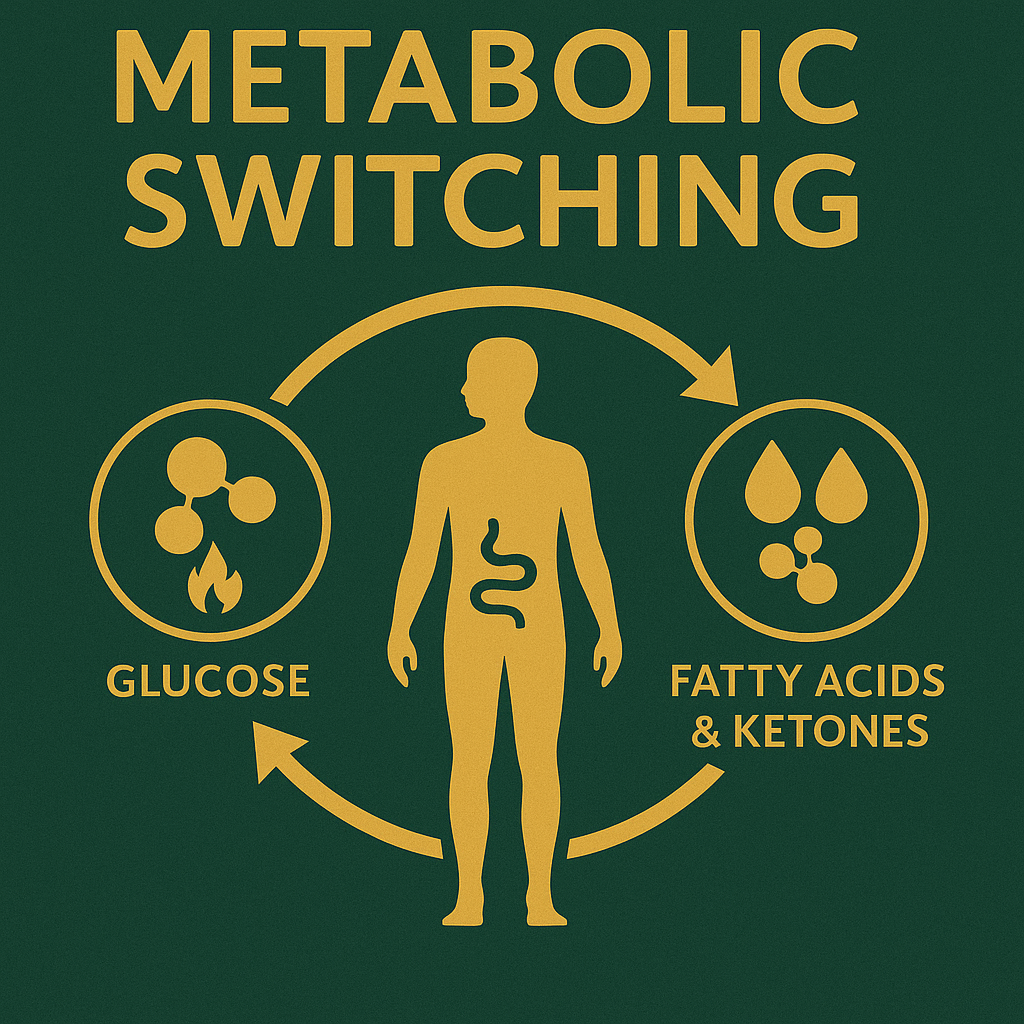
Metabolic Switching & Signalling
When you fast long enough, your body gradually shifts away from burning glucose as its main fuel. Instead, it starts using fatty acids and ketones. This process, often called metabolic switching, activates signalling pathways like AMPK and mTOR, which play roles in energy regulation and repair (Mattson).
What it means for you:
Fasting encourages your body to become more flexible in how it uses energy, which may improve resilience and reduce energy crashes.
Two
Circadian Timing (Biological Clock)
Your body has a natural clock that governs sleep, hormones, and metabolism. Eating in sync with this clock matters. Research by Satchin Panda shows that earlier eating windows—finishing meals earlier in the day—can improve blood sugar control and appetite regulation, even without weight loss.
What it means for you:
Eating earlier in your fasting rhythm may help you feel more balanced and support metabolic health.
Two
Circadian Timing (Biological Clock)
Your body has a natural clock that governs sleep, hormones, and metabolism. Eating in sync with this clock matters. Research by Satchin Panda shows that earlier eating windows—finishing meals earlier in the day—can improve blood sugar control and appetite regulation, even without weight loss.
What it means for you:
Eating earlier in your fasting rhythm may help you feel more balanced and support metabolic health.
Three
Autophagy (Cellular Housekeeping)
In longer fasts, your cells enter a process called autophagy, which literally means “self-eating.” Damaged proteins and cell components are broken down and recycled. Yoshinori Ohsumi’s Nobel Prize–winning work put autophagy in the spotlight. This process supports cellular repair, resilience, and healthy aging.
What it means for you:
While autophagy is promising for longevity, it’s not a license for extreme fasting. Balance and safety still matter most.

Weight & Metabolic Health
Four
Large studies comparing intermittent fasting with continuous calorie restriction often show similar weight-loss results. The biggest factor isn’t the method—it’s sustainability. Individual responses vary widely. What truly matters is finding an approach you can stick with long term.
What it means for you:
The “best” fasting protocol is the one you can keep doing while maintaining food quality, sleep, and lifestyle balance.
Four
Weight & Metabolic Health
Large studies comparing intermittent fasting with continuous calorie restriction often show similar weight-loss results. The biggest factor isn’t the method—it’s sustainability. Individual responses vary widely. What truly matters is finding an approach you can stick with long term.
What it means for you:
The “best” fasting protocol is the one you can keep doing while maintaining food quality, sleep, and lifestyle balance.
Five
Longevity Angles
Valter Longo’s Fasting-Mimicking Diet (FMD) explores periodic fasting designed to trigger healthy-ageing biomarkers. It’s an exciting area of research, but it’s a specialist protocol—not suitable for everyone. Always approach it with guidance and medical oversight.
What it means for you:
Fasting may support long-term health, but daily habits and safety should always come first.
The Fasting Treasure No where to found
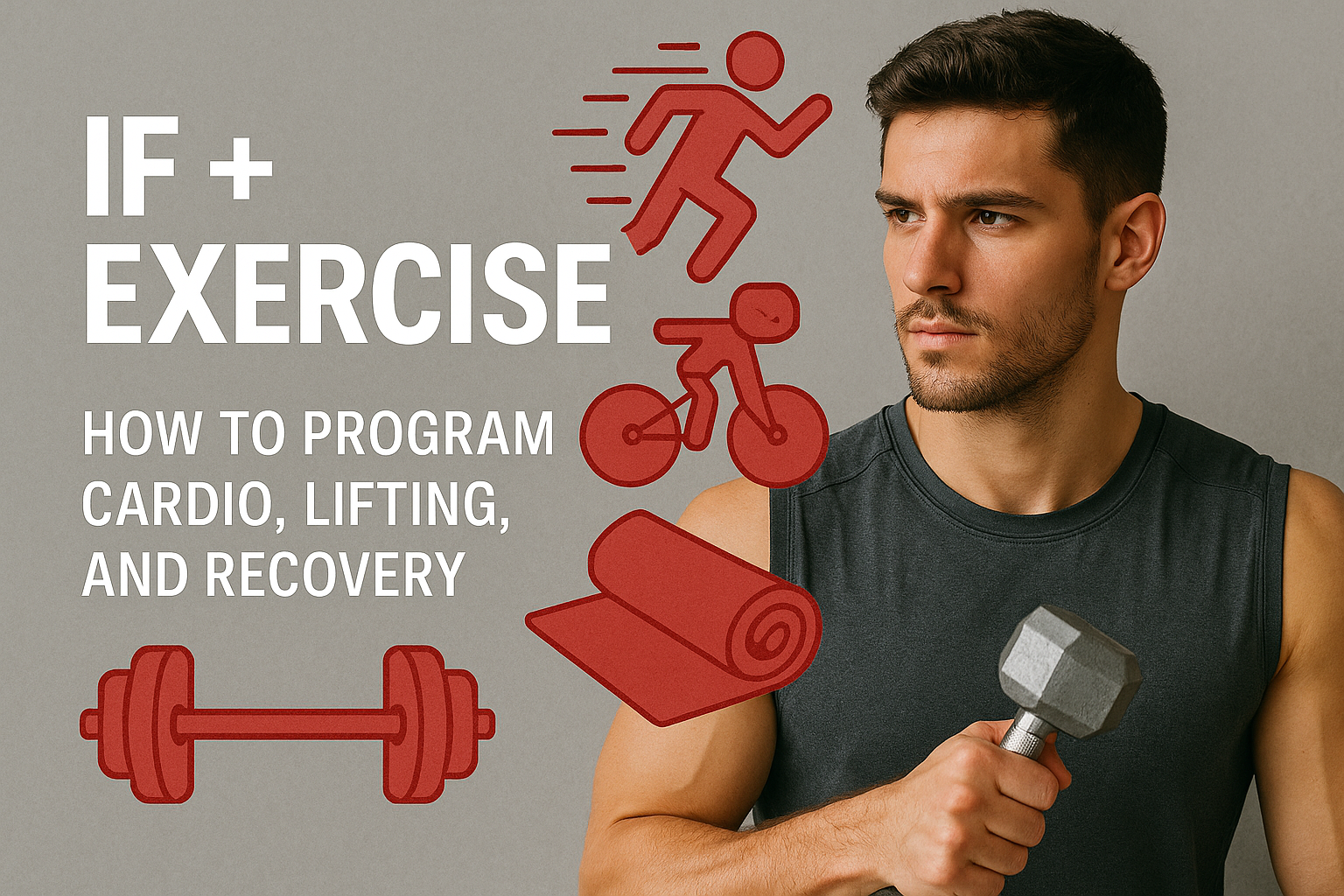
IF + Exercise: How to Program Cardio, Lifting, and Recovery
Intermittent fasting (IF) isn’t a training plan—but the way you train inside a fasting schedule matters. Done right, you can lift heavy, run faster, keep (or gain) lean mass, and use your fasting window as a compliance tool to manage hunger and calories—not as a limit on performance.
What happens to training in a fast?
During a fast, insulin is low (unlocking fat stores), norepinephrine rises (mobilizing fat), and growth hormone increases (lean-mass sparing) (de Cabo & Mattson, 2019). Ketones provide steady fuel for the brain, so you can focus, and your body becomes more metabolically flexible—better at burning fat at lower intensities. That’s why many people feel great doing steady cardio or skill work in a fast. For high-intensity work or heavy lifting, glycogen still matters—so you’ll either (a) train fasted and eat soon after, or (b) train within your eating window.
Lifting + IF: the research
In resistance-trained men, an 8-hour eating window (16:8) over 8 weeks produced fat loss without loss of muscle or strength (Moro et al., 2016). Reviews find IF can preserve lean mass as well as continuous diets when protein and progressive resistance training are in place (Tinsley & La Bounty, 2015). Translation: you can lift heavy and keep muscle on IF if you hit protein and total calories.
Cardio + IF: “train low,” race high
For submaximal cardio, a fasted session nudges your body to oxidize more fat (Hawley & Burke, 2010). That doesn’t mean every session should be fasted; it means you can place easy/steady work when fasted to develop fat-burning capacity, then fuel harder intervals or key long runs inside the eating window.
Programming templates (pick one)
A) Strength-biased (4 days/week lifting)
Mon/Thu (fasted AM or pre-lunch): Squat/hinge focus; break fast within 1–2 h post-lift (30–50 g protein + carbs).
Tue (easy cardio/skills): 30–40 min steady; hydrate + electrolytes.
Sat (upper push/pull): Train at start of eating window; normal meals after.
B) Endurance-biased (2–3 lifts + intervals)
Mon/Wed/Fri: 30–60 min steady cardio fasted; optional strides at end.
Tue/Sat: Lift at first meal; add intervals (e.g., 6×3 min @ 5K effort) within window.
Long run/ride: Place in window; pre-fuel lightly (banana/yogurt), eat protein-carb meal after.
C) General fitness (3 lifts + 2 mixed cardio)
Mon/Wed/Fri: Full-body lifting (compound push/pull/hinge/squat).
Tue/Sat: 20–30 min zone 2 + 6–8 hill sprints or short intervals (do inside window if intensity is high).
Protein, carbs, and total calories
Protein: Aim for 1.6–2.2 g/kg/day (Morton et al., 2018), split over 2–3 feedings ≥25–40 g each to maximize muscle protein synthesis.
Carbs: You don’t need to go ultra-low. Use carb periodization—cluster more carbs on lift/interval days (inside your window) and fewer on easy/rest days.
Fats: Include quality fats (olive oil, nuts, omega-3s) for satiety and recovery.
Creatine: 3–5 g/day supports strength and lean mass irrespective of timing.
Fasted training tips (so it feels good)
Hydrate; add a pinch of salt or an electrolyte tab if you cramp or eat lower-carb.
Keep fasted sessions ≤60 min if high intensity; extend easy/steady work as you adapt.
If heavy squats/deads feel flat fasted, shift them into the window or add a tiny protein-only “preload” (know it breaks a strict fast, but it can be worth it for performance).
Break the fast within ~1–2 hours after lifting with 30–50 g protein + carbs (e.g., eggs + rice, Greek yogurt + fruit, tofu bowl with quinoa).
Recovery and readiness
Sleep (7–9 hours) is your anabolic multiplier. IF often improves sleep when eating stops 2–3 h pre-bed. Track simple markers—resting heart rate, mood, bar speed—to avoid pushing intensity on under-recovered days. If you’re dragging for a week, widen the window or raise calories by ~10%.
Female athletes: cycle-aware tweaks
Many women do great with 14:10 most days; extend to 16:8 if energy, mood, and cycles are stable. In late luteal phase, slightly shorten the fast or bring carbs closer to training if sleep/cravings dip. The rule: fuel the work, protect cycles, and progress loads.
Bottom line
Use IF as a structure tool, not a limiter. Lift heavy 2–4×/week, layer easy cardio (fasted is fine), fuel key efforts in your window, and hit daily protein. Do that, and IF supports the exact adaptations you want—stronger, fitter, leaner.
Selected references
Moro T et al. Time-restricted feeding + resistance training. J Transl Med. 2016;14:290.
Tinsley GM, La Bounty PM. IF and body composition/performance. Nutr Rev. 2015;73:661–674.
Hawley JA, Burke LM. “Train-low” for endurance adaptations. Sports Med. 2010;40:1–23.
de Cabo R, Mattson MP. N Engl J Med. 2019;381:2541–2551.
Morton RW et al. Protein dose & MPS. Br J Sports Med. 2018;52:376–384.

What’s Next Step
Explore our Beginner’s Guide or download the 14-Day Plan to start applying these principles safely in your daily life.
COMPANY
Keep in Touch
Copyrights 2025 | Terms & Conditions
Disclaimer: The information available is for informational purpose only and not intended to diagnose, treat, cure, or prevent any disease.