
How Fasting Works
Simple science, practical takeaways.
Fasting changes more than your eating schedule it changes how your body fuels, repairs, and regulates itself. Here are the key processes explained simply:
Metabolic Switching & Signalling
Circadian Timing (Biological Clock)
Autophagy (Cellular Housekeeping)
Longevity Angles
Weight & Metabolic Health
Details are Given Below
One
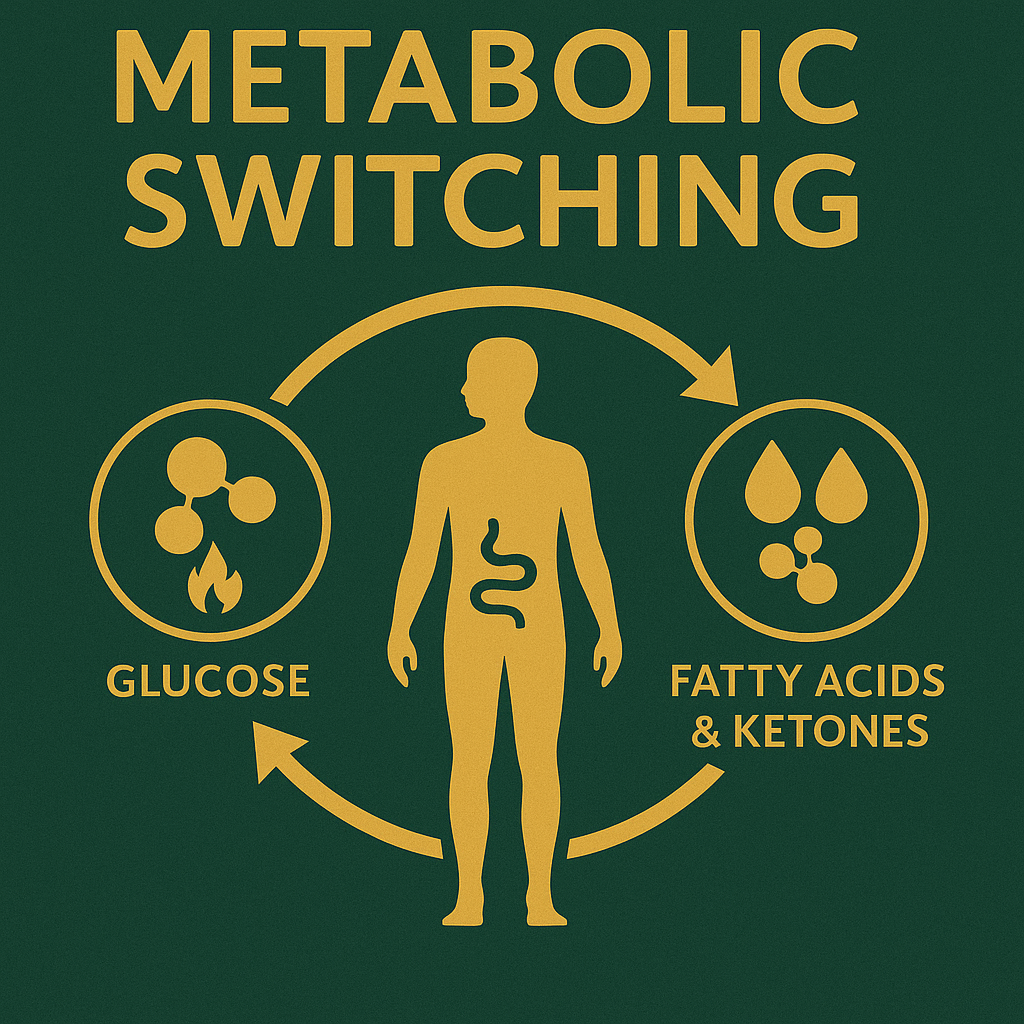
Metabolic Switching & Signalling
When you fast long enough, your body gradually shifts away from burning glucose as its main fuel. Instead, it starts using fatty acids and ketones. This process, often called metabolic switching, activates signalling pathways like AMPK and mTOR, which play roles in energy regulation and repair (Mattson).
What it means for you:
Fasting encourages your body to become more flexible in how it uses energy, which may improve resilience and reduce energy crashes.
Two
Circadian Timing (Biological Clock)
Your body has a natural clock that governs sleep, hormones, and metabolism. Eating in sync with this clock matters. Research by Satchin Panda shows that earlier eating windows—finishing meals earlier in the day—can improve blood sugar control and appetite regulation, even without weight loss.
What it means for you:
Eating earlier in your fasting rhythm may help you feel more balanced and support metabolic health.
Two
Circadian Timing (Biological Clock)
Your body has a natural clock that governs sleep, hormones, and metabolism. Eating in sync with this clock matters. Research by Satchin Panda shows that earlier eating windows—finishing meals earlier in the day—can improve blood sugar control and appetite regulation, even without weight loss.
What it means for you:
Eating earlier in your fasting rhythm may help you feel more balanced and support metabolic health.
Three
Autophagy (Cellular Housekeeping)
In longer fasts, your cells enter a process called autophagy, which literally means “self-eating.” Damaged proteins and cell components are broken down and recycled. Yoshinori Ohsumi’s Nobel Prize–winning work put autophagy in the spotlight. This process supports cellular repair, resilience, and healthy aging.
What it means for you:
While autophagy is promising for longevity, it’s not a license for extreme fasting. Balance and safety still matter most.


Weight & Metabolic Health
Four
Large studies comparing intermittent fasting with continuous calorie restriction often show similar weight-loss results. The biggest factor isn’t the method—it’s sustainability. Individual responses vary widely. What truly matters is finding an approach you can stick with long term.
What it means for you:
The “best” fasting protocol is the one you can keep doing while maintaining food quality, sleep, and lifestyle balance.
Four
Weight & Metabolic Health
Large studies comparing intermittent fasting with continuous calorie restriction often show similar weight-loss results. The biggest factor isn’t the method—it’s sustainability. Individual responses vary widely. What truly matters is finding an approach you can stick with long term.
What it means for you:
The “best” fasting protocol is the one you can keep doing while maintaining food quality, sleep, and lifestyle balance.
Five
Longevity Angles
Valter Longo’s Fasting-Mimicking Diet (FMD) explores periodic fasting designed to trigger healthy-ageing biomarkers. It’s an exciting area of research, but it’s a specialist protocol—not suitable for everyone. Always approach it with guidance and medical oversight.
What it means for you:
Fasting may support long-term health, but daily habits and safety should always come first.
The Fasting Treasure No where to found

Breaking a Fast: Exactly What to Eat (and Why It Matters)
How you break your fast sets the tone for the rest of the window—energy, appetite, and glycemia. The goal is to re-feed without a glucose whiplash, hit a solid protein target, and get micronutrients that support metabolism.
Principles first
Protein anchor. Start with 25–40 g high-quality protein (eggs, Greek yogurt, tofu/tempeh, fish, chicken, legumes + grains). This stimulates muscle protein synthesis (MPS), stabilizes appetite, and blunts glucose excursions.
Fiber + polyphenols. Vegetables, berries, pulses, and whole grains slow gastric emptying and feed the microbiome → steadier glucose and better satiety.
Smart carbs, not fear of carbs. Especially if you train, include minimally processed carbs alongside protein/fiber to replenish glycogen without spikes.
Electrolytes & hydration. During fasts you excrete more sodium; a pinch of salt or mineral water when breaking the fast can relieve dizziness or cramps (especially on lower-carb diets).
Three break-fast templates
1) Protein + plants first (everyday).
Bowl: 200 g Greek yogurt or skyr + 30 g whey/collagen, mixed berries, chia/flax, crushed nuts; side of cucumber/tomatoes + olive oil.
Or: 3 eggs + 100 g smoked salmon; big salad with mixed greens, peppers, olive oil, lemon; slice of whole-grain or a small portion of quinoa.
2) Resistance-training recovery.
30–50 g whey/soy shake within ~60 min of training; follow with a meal: chicken/tofu stir-fry, mixed veg, jasmine rice; fruit for dessert.
Alternatively: tuna/bean salad in olive oil with potatoes; kefir on the side.
3) Plant-forward/low-GI.
Lentil/vegetable soup; side of tempeh and avocado; berries with soy yogurt.
Chickpea-quinoa bowl with tahini and roasted veg; apple with almond butter.
What to limit when opening the window
Ultra-processed sweets & refined flour (donuts, pastries): fast absorption → glucose/insulin spike, rebound hunger.
Large alcohol hits on an empty stomach.
Very high-fat first bite if you’re acid-reflux-prone; start lighter, then enjoy richer foods later.
Sequence matters
Lead with protein + plants, then layer in carbs and fats. This “veggie-first” approach reduces post-meal glucose and insulin peaks, improving satiety for the rest of the window.
Micronutrients & supplements
Creatine (3–5 g/day) for lifters.
Omega-3s (if intake is low) support cardiometabolic and brain health.
Magnesium (glycinate/citrate) can help sleep and glucose control; discuss with a clinician if on meds.
Troubleshooting
Intense hunger → overeating: Add a small protein preload (bone broth with collagen; a boiled egg) 20–30 min before your main plate.
GI discomfort: Break with a gentler meal (e.g., yogurt + berries) and avoid bolus high-fat loads as the first bite.
Sleep disruption: Avoid heavy meals close to bedtime; consider earlier windows.
Bottom line: A well-designed break-fast primes your physiology: stable glucose, high satiety, and strong MPS. The formula isn’t fancy—protein + plants first, add smart carbs and fats, hydrate, and you’re set.
Selected references
de Cabo R, Mattson MP. N Engl J Med. 2019;381:2541–2551.
Morton RW et al. Protein and MPS. Br J Sports Med. 2018;52:376–384.
Kahleova H et al. Meal sequencing and glycemia. Nutr Diabetes. 2014;4:e134.
Sutton EF et al. Cell Metab. 2018;27:1212–1221.e3.

What’s Next Step
Explore our Beginner’s Guide or download the 14-Day Plan to start applying these principles safely in your daily life.
COMPANY
Keep in Touch
Copyrights 2025 | Terms & Conditions
Disclaimer: The information available is for informational purpose only and not intended to diagnose, treat, cure, or prevent any disease.